
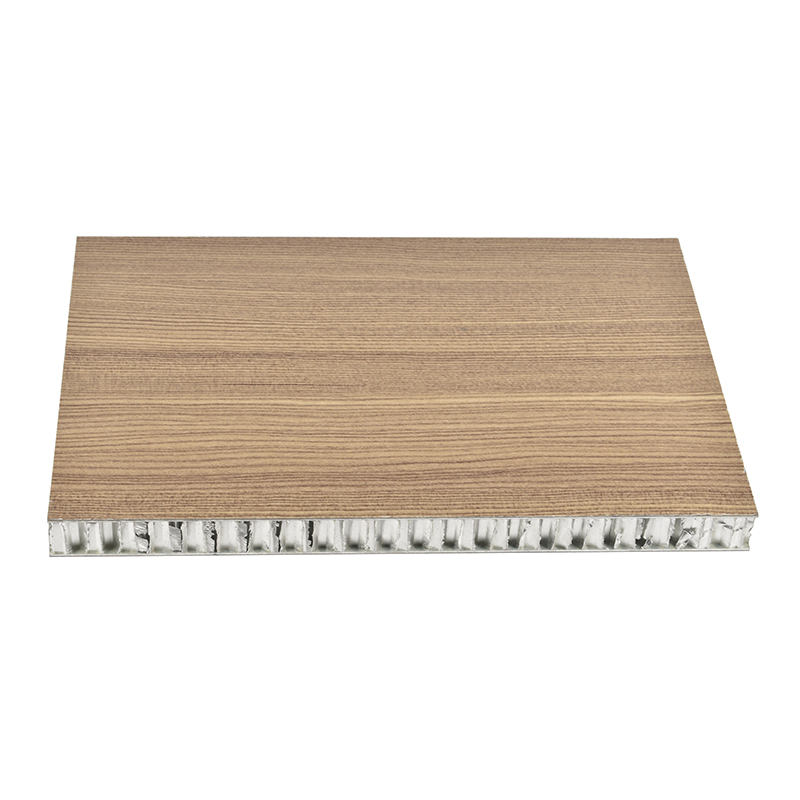
In the evolving world of construction and manufacturing, materials innovation continues to play a pivotal role in enhancing structural performance, durability, and design flexibility. One such innovation with considerable impact is the development and optimization of honeycomb panel thickness. These panels are increasingly being recognized for their exceptional strength-to-weight ratio, energy efficiency, and versatility across a multitude of industries.
Honeycomb panels are engineered composite materials consisting of a core structured with hexagonal cells resembling a honeycomb, sandwiched between two thin face sheets. This design offers remarkable rigidity and strength while maintaining low weight. The thickness of these panels significantly influences their mechanical properties, thermal insulation, and acoustic performance, making careful consideration of panel thickness essential for any construction project.
Advancements in manufacturing technologies and material science have enabled companies to tailor honeycomb panel thickness precisely to meet specific project demands. Whether the application is in aerospace, marine, automotive, commercial, residential, or industrial construction, selecting the appropriate thickness ensures optimal functionality, safety, and cost efficiency.
One leading company at the forefront of this sector is Alucrown. Known for its commitment to the latest technology and the highest quality materials, Alucrown produces honeycomb panels that serve a broad spectrum of applications. Their products are integral components in projects that demand lightweight yet strong materials, ranging from aerospace components, which require minimal weight without compromising strength, to marine vessels that benefit from corrosion-resistant and lightweight structural panels.
**Importance of Honeycomb Panel Thickness**
The thickness of a honeycomb panel impacts various performance aspects:
1. **Structural Strength and Rigidity:** Thicker panels often provide greater load-bearing capacity and stiffness, which is crucial for high-stress environments. For example, in automotive and aerospace applications where vibration resistance and structural integrity are critical, optimized thickness ensures reliability and durability.
2. **Thermal Insulation:** Thicker honeycomb cores can improve thermal insulation, advantageous in residential and commercial buildings where energy efficiency is a priority. Thermal resistance contributes to reduced heating and cooling costs, aligning with sustainable construction practices.
3. **Acoustic Properties:** Thicker panels can offer better sound dampening capabilities. This characteristic is especially valuable in commercial buildings, residential apartments, and automotive interiors where noise reduction enhances occupant comfort.
4. **Weight Considerations:** While increased thickness enhances specific properties, it naturally adds weight. This is an important trade-off carefully balanced in applications such as aerospace and marine, where weight reduction impacts fuel efficiency and maneuverability.
5. **Cost Efficiency:** Panel thickness affects material costs and installation complexity. Efficient use of materials by selecting the right thickness can lead to reduced expenses and faster project completion times.
**Applications Across Industries**
- **Aerospace:** In the aerospace sector, honeycomb panels are favored for their lightweight yet strong configuration. The aerospace industry demands materials that withstand extreme temperatures, pressures, and mechanical forces while keeping aircraft weight as low as possible to maximize fuel efficiency. Panels with tailored thicknesses are utilized in flooring, bulkheads, wing structures, and interior elements.
- **Marine:** For shipbuilding and marine engineering, honeycomb panels provide corrosion-resistant, durable, and lightweight solutions that enhance vessel performance. Proper thickness ensures resistance to water pressure and mechanical stresses inherent in maritime environments.
- **Automotive:** The automotive industry leverages honeycomb panels for interior parts, bumpers, and structural reinforcements. Thicker panels might be used where impact resistance is necessary, while thinner panels suit lightweight interior components.
- **Commercial and Residential Construction:** Honeycomb panels feature in facades, flooring, partitions, and ceilings. Their thermal and acoustic properties contribute to creating efficient and comfortable living and working spaces. The flexibility in thickness options allows architects and engineers to meet aesthetic and functional requirements.
- **Industrial Uses:** In industrial applications, honeycomb panels serve as protective shields, workstation surfaces, and machinery enclosures. Thickness selection ensures the durability and protection of sensitive equipment while maintaining mobility or ease of installation.
**Alucrown’s Commitment to Quality and Innovation**
Alucrown distinguishes itself by utilizing state-of-the-art technology to manufacture high-performance honeycomb panels with precision-controlled thickness specifications. Their ongoing dedication to research and material excellence allows them to supply products that meet stringent industry standards.
By collaborating with clients across diverse sectors, Alucrown ensures customized solutions that address unique project challenges. Their honeycomb panels undergo rigorous testing for strength, durability, thermal conductivity, and acoustic performance, assuring end-users of dependable and efficient materials.
Moreover, Alucrown’s sustainable manufacturing practices emphasize reducing material waste and employing eco-friendly materials wherever possible. This commitment not only benefits the environment but also aligns with the growing global emphasis on green building solutions.
**Looking Ahead: The Future of Honeycomb Panel Thickness Optimization**
With continued technological advancements, the future promises even greater precision in honeycomb panel thickness engineering. Emerging materials such as advanced alloys, composite skins, and innovative core designs are anticipated to broaden application possibilities.
Additive manufacturing and automated production lines enable customized panel thickness profiles tailored to exact structural loads, further optimizing performance and cost. Additionally, digital simulation tools aid engineers in predicting how thickness variation affects panel behavior under real-world conditions, facilitating smarter design decisions.
In conclusion, the role of honeycomb panel thickness is pivotal in unlocking the material's full potential across aerospace, marine, automotive, commercial, residential, and industrial sectors. Companies like Alucrown, with their focus on leveraging the latest technology and superior quality materials, are integral to advancing this field. As industries continue to demand materials that are lighter, stronger, and more efficient, the strategic optimization of honeycomb panel thickness will remain a cornerstone of modern construction and manufacturing innovation.